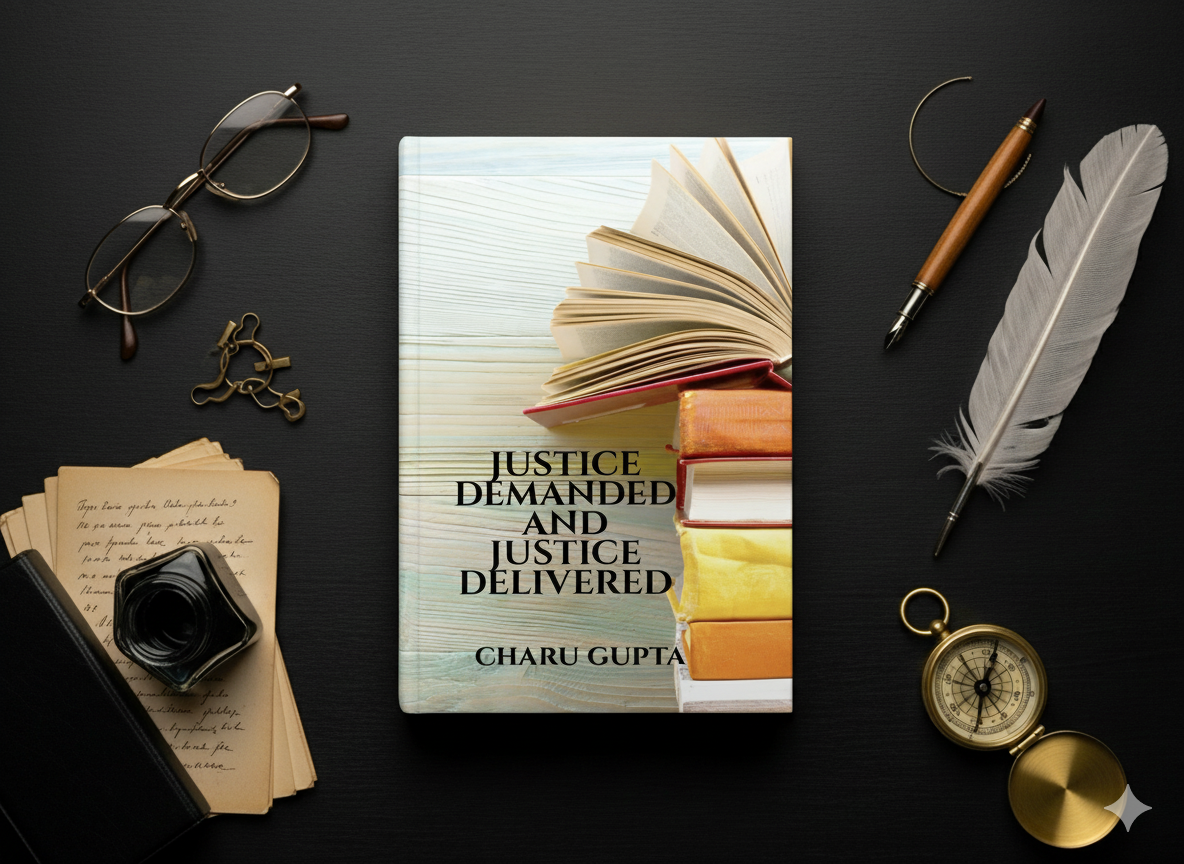
A discussion about the core themes of her latest book.
1. Your book’s title, “Justice Demanded and Justice Delivered,” suggests a two-part process. Could you elaborate on what you see as the key differences between a society demanding justice and a society successfully delivering it?
We demand justice when its opposite occurs—threats, assaults, crimes, and abuse. Justice is the only shield for the innocent. A society that demands justice is one where people are aware of wrongdoing and are willing to speak up.
However, for justice to be delivered, those tasked with this duty must act effectively. An act of injustice is harmful to everyone, and no one should be able to hide from its consequences. A society that successfully delivers justice is one where systems are responsive, and the community works together to be part of the solution. It also involves proactively eliminating the root causes of injustice, such as the inferiority complex that often fuels abuse. We must replace abuse in all its forms—verbal, behavioural, or substance-related—with nurture and nourishment.
2. You state that “a common man is no less powerful.” In what ways can an ordinary individual, without institutional power, contribute to making justice a more powerful force?
An ordinary person is incredibly powerful within a just system. Our system of governance is designed for our collective well-being, and we participate by being law-abiding citizens. A common person is powerless without justice, and justice itself becomes meaningless if it fails to protect the ordinary citizen.
Those who speak eloquently about the constitution must remember that for the average person, justice is the primary source of protection and power. An individual contributes to this power by first ensuring they are not a source of injustice themselves. By living with integrity and holding the system accountable to be responsive, every person strengthens the fabric of justice for all.
3. The book touches on the idea that people want to be “free from injustice, crimes, threats, assault and abuse.” In your opinion, which of these forms of injustice is most prevalent today, and what is the first step toward addressing it?
All forms of injustice deserve our equal attention and condemnation. It is the foremost duty of a government to protect its citizens. Injustice breeds fear, and a society suffering from fear loses its confidence.
However, if we look at the foundation, a lack of protection against fundamental needs can be seen as a prevalent and root injustice. This includes protection from undernutrition, malnutrition, illiteracy, and the lack of opportunities, infrastructure, and basic amenities. A nurtured and healthy citizen is confident and can build a better future. The first step, therefore, is ensuring these basic protections. A healthy individual—free from drug, health, behavioural, and language abuse—is less likely to commit or tolerate injustice. This responsibility begins with the family and extends to society and the government.
4. The book’s brevity is one of its notable features. Was this a conscious choice to make the message more accessible? What message do you hope readers take away in the short time it takes to read your book?
Yes, the length was a conscious choice. I believe the book is long enough to effectively spread the core message: justice and power are essential for survival. You cannot survive without the power that justice provides, nor can you do away with the necessity of seeking it.
My book covers the essential concepts, empowering an individual to avoid and prevent the causes of injustice and to use the law when needed. I hope the key takeaway for readers, especially the younger generation, is to stay strong, avoid injustice, and understand that real power comes from hard work and effort. When you seek results from your own efforts, you can never truly lose.
5. You mention the universal desire for “love and peace to prevail.” How does the concept of justice, as you define it, serve as a foundational element for achieving this love and peace?
Love and peace are the most potent solutions for preventing and curbing injustice. A significant amount of crime, assault, and abuse can be prevented if society moves in the direction of love and peace. Undue aggression creates imbalance and disruption.
Justice provides the framework in which love and peace can flourish. When people feel safe, protected, and treated fairly, there is less room for the anger and desperation that lead to conflict. It is the responsibility of all citizens to avoid aggression and promote harmony. Therefore, justice isn’t separate from love and peace; it is the soil in which they grow. When justice prevails, it provides relief from aggression and allows love and amity to thrive.
6. Could you share a personal experience or a specific story that inspired you to write about these themes of justice and power?
I prefer not to mention any specific personal experiences. However, I will say that my inspiration comes from the observation that when an innocent person seeks the shelter of a system to get justice, good people within that system often respond. One should never hesitate to choose justice over suffering.
Justice for one means relief for all. My motivation for writing this book was to encourage people to be brave enough to seek justice from the system. It may require patience, but it will save you from the grief and regret of not trying. I wrote this for the prevalence of a healthy society where individuals can reject the inferiority of fallacies, threats, and abuses, and instead choose a healthy, nurtured life.
7. For readers who feel inspired by your book but are unsure of what to do next, what is one concrete action you would recommend they take to begin their personal journey of demanding and delivering justice?
The most concrete and powerful action is to care for their families.
Healthy, nurtured, and nourished individuals do not easily fall prey to committing injustice. They believe in a sane society where people are more accommodating, happy, and calm. A person who is cared for spreads more love and rejects hatred. We can create a happier world with our collective efforts.
My sincere wish is to see all children happy and healthy. So, let us all make a conscious effort to care for our elders and love our children unconditionally. Nurturing our future with love will beget more affection, and that will be the ultimate savior of our society from all injustices.
About the Author
Charu Gupta is an accomplished author and entrepreneur with a deep-rooted passion for the intricate connections between science, society, and the human spirit. She holds a Bachelor of Science in Life Sciences and a Master of Science in Environment Management, an academic background that informs her holistic approach to writing.
At 40, Charu has penned ten insightful books that explore themes of leadership, humanity, justice, and personal growth. When she isn’t writing, she dedicates her time to her entrepreneurial ventures and enjoys the creative outlets of embroidery and handicrafts.
Published Works:
- Valuable Insights To Inspire Your Mind And Guide Your Heart
- Follow Me, I Agree To Lead (Part 1 And Part 2)
- Effective Humanity
- Prabhavi Manavta
- Rule O Lion, Rule The World Again
- A Song For My Friends
- The Beautiful Animal Kingdom
- Letters From A Follower To The Leader
- 34 Days Journal To Inspire Your Mind And Guide Your Heart
- Justice Demanded And Justice Delivered